Skip to content

Cart

Your cart is empty

Article: How corporate gifting funds real ocean restoration

How corporate gifting funds real ocean restoration

How corporate gifting funds real ocean restoration

A turtle swimming over a sea grass bed underwater.

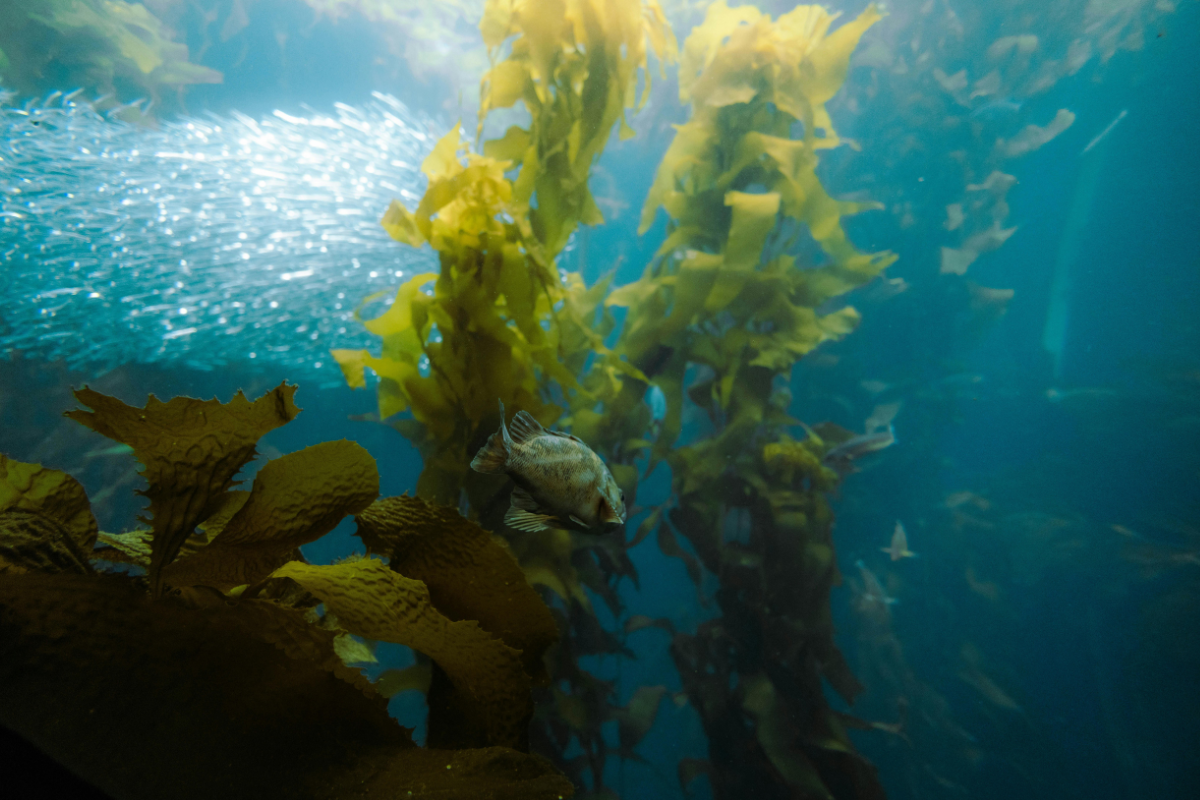
Somewhere off the coast of Sydney, a kelp forest that once stretched for miles has gone quiet. Warming waters pushed the kelp to its limits. And once kelp disappears, the hundreds of species that depend on it, such as fish, invertebrates, and sea otters, will follow.

Sydney is only one coastline among hundreds. This decline is happening on coastlines around the world, right now, while we plan our next corporate gifting season. Ocean conservation gifts offer a way to turn that gifting budget into real marine life restoration, ocean cleanup, and long-term sustainability.

World Oceans Day falls on June 8. Here's what we think it should mean: less talk, more restoration. And a look at how the things we buy, even the gifts we give, can become part of the solution.


The math behind the crisis

Oceans cover 71% of the planet's surface. They produce over half the world's oxygen and absorb roughly a quarter of our carbon emissions. They regulate weather, feed billions of people, and support economies from fishing villages to global shipping routes.

And they're under pressure from every direction.

An estimated 11 million metric tons of plastic enter the ocean every year, making plastic pollution one of the most visible threats to marine life. Seagrass meadows, which store carbon up to 35 times faster than tropical rainforests, have been declining at a rate of 7% per year since the 1990s. Kelp forests along coastlines from Tasmania to California to Norway are thinning or vanishing.

These aren't just ecological losses. Seagrass and kelp are carbon sinks. When they disappear, stored carbon releases back into the atmosphere, accelerating the cycle that caused the decline in the first place.

What restoration looks like (and who's doing it)

A snapshot of the ocean conservation project done by SeaTrees

This is where the story shifts from crisis to possibility.

SeaTrees is a cause partner that works on marine habitat restoration: kelp, seagrass, and coastal watersheds. Their projects don't just plant. They restore ecosystems, employing local communities in the process and creating lasting biodiversity improvements. Through GIFTforward, every gift tied to SeaTrees funds measurable restoration—three feet of seagrass, one foot of kelp, one foot of coastal watershed. These aren't symbolic gestures. They're quantified, verified, and trackable through SeaTrees' partnership with marine conservation scientists.

And then there's what happens on land that matters just as much. Eden Reforestation Projects has planted over 1 billion trees across 8 countries, restoring mangrove forests that serve as critical nurseries for marine life. Mangroves filter water before it reaches the ocean, buffer coastlines from storm surges, and sequester carbon at rates that rival any terrestrial forest. Gifts for Good has helped fund over 1.6 million trees through this partnership since 2017.

What a corporate gifting program can actually fund

A snapshot of restoration projects by Eden Reforestation

Here's the part that surprises most procurement and HR leaders: the gifting budget they already have is enough to fund meaningful environmental restoration.

A company that sends holiday gifts through GIFTforward, with a Charity Impact option for seagrass restoration, funds and can restore thousands of feet of seagrass, kelp, and coastal watershed.

That's real habitat. Real carbon capture. Real marine biodiversity.

And a company sending 5,000 employee recognition gifts a year—even at modest price points, with ocean-protecting options mixed into the selection—funds thousands of feet of restored habitat and employment for the communities doing the restoration work.

Nearly half of corporate buyers say they've watched their own gifts get discarded, and the frustration is driving a rethink of how companies give altogether, according to Custom Ink's 2026 Swag Trends Survey. GIFTforward's recipient-choice model solves that at the root.

When people choose their own gift, they keep it. And when one of those choices is a Charity Impact that restores seagrass, the "gift" literally becomes the ocean floor.

The ocean doesn't wait for awareness

June 8 comes once a year. The need for restoration doesn't take the other 364 days off.

The most powerful thing a company can do this World Oceans Day isn't post about it. It's build ocean protection into the way they operate: the gifts they give, the materials they choose, the waste they prevent, and the partners they fund.

Explore the environment collection or build a GIFTforward program that puts ocean restoration into every recipient's hands.

NEXT STEPS...

Talk to Our Gift Experts

Explore our corporate gift services or get in touch with our Gift Experts to plan your next campaign.

Black silhouette of a person holding a smartphone in one hand.

Blog

What is Regenerative Farming and Why Does it Matter for Corporate Gift Sourcing?

What is Regenerative Farming and Why Does it Matter for Corporate Gift Sourcing?

Regenerative farming goes beyond sustainable. Learn what it means, why it matters for corporate gift sourcing, and how Gifts for Good partners like TerraThread and Bona Furtuna are proving it throu...

Read more
How corporate gifting funds real ocean restoration

How corporate gifting funds real ocean restoration

Your corporate gifting budget can restore kelp forests, fund seagrass recovery, and remove ocean plastic. See how GIFTforward makes it possible.

Read more
Gifts for Good Climate Action Plan: Leading by Example

Gifts for Good Climate Action Plan: Leading by Example

Most purpose-driven companies talk about sustainability. This is how we're acting on it. Gifts for Good's Climate Action Plan sets three concrete targets: expanding GIFTforward to 75% of new propos...

Read more