Skip to content

Cart

Your cart is empty

Article: What is Regenerative Farming and Why Does it Matter for Corporate Gift Sourcing?

What is Regenerative Farming and Why Does it Matter for Corporate Gift Sourcing?

What is Regenerative Farming and Why Does it Matter for Corporate Gift Sourcing?

Regenerative Farming Illustration | Gifts for Good

Let's be honest. "Sustainable" has kind of lost its punch.

It's on water bottles, tote bags, fast fashion websites, and oil company ads. It's in every brand's Earth Month newsletter and most corporate ESG slide decks. At this point, if a company isn't calling itself sustainable, that feels like the news.

We're not saying sustainability is bad. We're saying the bar has moved. And some of the most exciting things happening in agriculture right now are proof of that.

Enter: regenerative farming. It's not a buzzword (yet). It's a method. And once you understand it, you'll start to see gifts, and supply chains, very differently.

So what is regenerative farming, exactly?

Man tending to plants in a greenhouse setting.

Photo Credit: Eden Reforestation Projects

Regenerative farming is a set of practices designed to do something conventional agriculture mostly doesn't: give back to the land.

Most farming, even well-intentioned farming, takes. It plants, harvests, and depletes — slowly stripping soil of the nutrients, microorganisms, and structure that make it alive in the first place. Do that long enough and the soil stops working. We're already seeing the effects globally.

Regenerative agriculture flips that script. Instead of extracting from the land, it works with it. The goal isn't just to minimize damage, it's to actively restore what's been lost.
In practice, that looks like:

  • No-till or low-till farming: leaving soil structure intact, protecting the underground ecosystem that makes healthy plants possible
  • Cover cropping: planting between harvest cycles to protect and nourish the soil instead of leaving it bare
  • Crop rotation and polyculture: varying what grows where, so the land doesn't get depleted and biodiversity can thrive
  • Natural composting: feeding soil organically, not chemically
  • Thoughtful water stewardship: reducing runoff, conserving freshwater, working with natural irrigation sources


The result is healthier soil that holds more carbon, needs fewer chemical inputs, supports more wildlife, and keeps producing — year after year — without burning itself out.

That's regenerative. Not just sustainable. Restorative. It's also why regenerative products make some of the most meaningful employee appreciation gifts. The story behind them is already doing the work.

Wait, isn't that just organic farming?

Close, but not quite. Organic farming says "no harmful chemicals or GMOs." That matters enormously. But it doesn't automatically mean the farm is rebuilding soil health or sequestering carbon.

Regenerative goes further. It asks: is this land better than it was last season? Is biodiversity increasing? Is the soil more alive? Is this farm pulling carbon out of the atmosphere, not just reducing how much it adds?

Think about it this way: two boxes of food gifts can both be labeled organic, but only one of them came from land that's getting healthier every season.

The highest standard for this right now is Regenerative Organic Certified® (ROC™) — overseen by the Regenerative Organic Alliance. It layers on top of USDA organic standards and adds rigorous requirements for soil health, animal welfare, and the social wellbeing of every farmer and worker in the supply chain. Farms are certified at Bronze, Silver, and Gold levels, and they have to keep improving to keep the certification.

Regenerative farming is not a one-time badge. It's an ongoing commitment.

Our cause partners in regenerative farming

We want to name names here because vague gestures at "ethical sourcing" are exactly what we're pushing back against. Here are two vendor partners in our catalog who are doing regenerative farming in ways we can point to specifically.

Terra Thread

Bumi Eco Duffle Bag from Terra Thread

Terra Thread was started by a father-daughter duo, Vik and Vizan Giri, who were fed up with the fashion industry's relationship with the planet. Fossil fuel-based bags, chemically treated cotton, workers paid unfairly — they saw all of it, and decided to build something different.

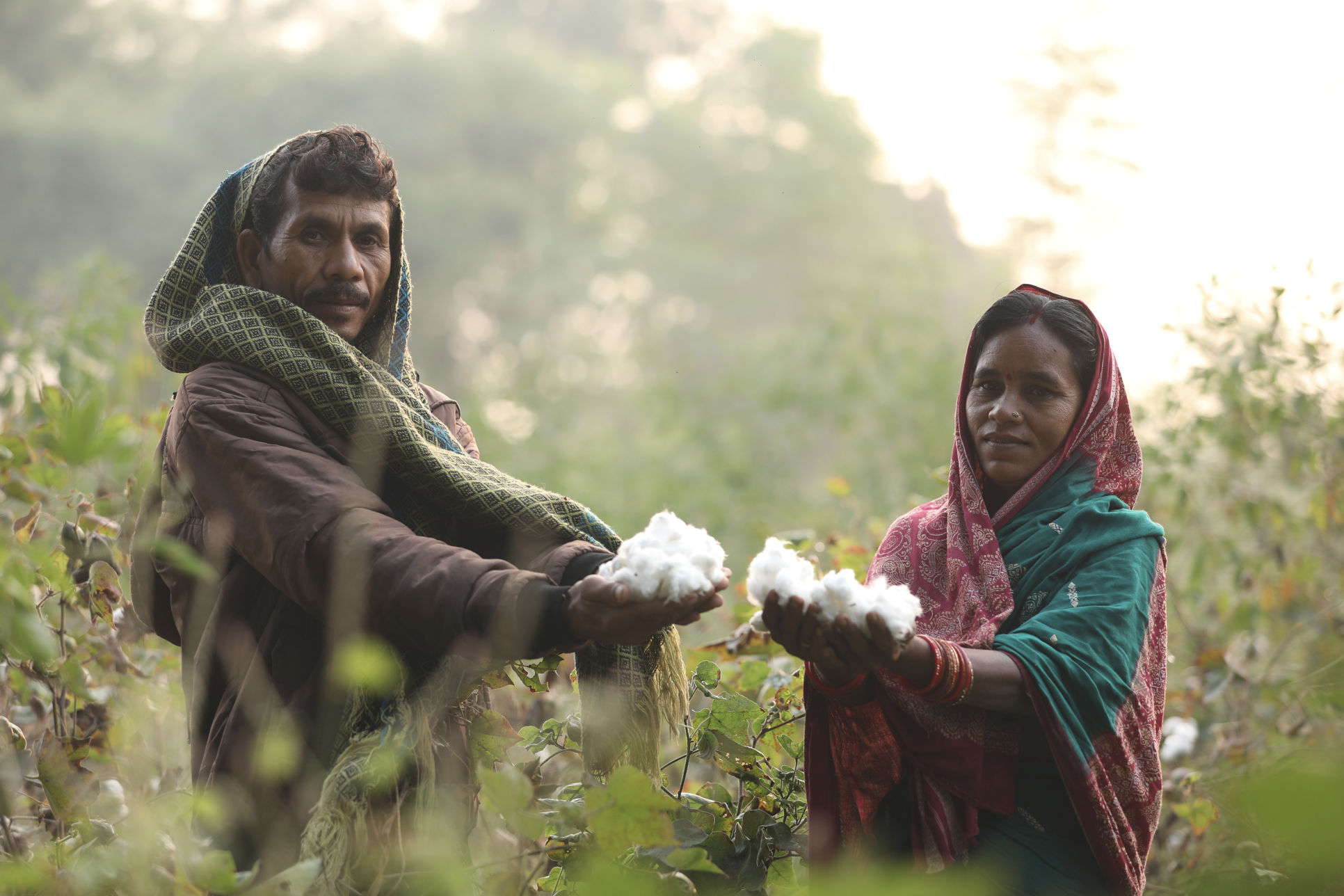
Their entire apparel line is made with ROC™ cotton, sourced from farmers in Orissa and Telangana, India — regions where climate change is already creating real pressure on farming communities. For those farmers, regenerative practices aren't a trend. They're a lifeline. Building resilient, nutrient-rich, self-sustaining farms is the difference between a livelihood and losing one.

In 2022, Terra Thread helped transition over 3,500 acres of farmland to ROC™ certification — one of the largest regenerative organic cotton projects in the world. Their products are also made in Fair Trade Certified™ factories, which means every person in that supply chain is working in safe conditions and being paid fairly.

When someone receives a Terra Thread bag, they're holding something that came from land that was intentionally healed to make it. That's a different kind of gift.

Bona Furtuna

The Corleone from Bona Furtuna

This one has story behind it that we genuinely love.

Bona Furtuna co-founder Steve Luczo spent decades searching for land in Corleone, Sicily — the place his grandmother had described to him as a child, the land his family had left behind. When he finally found it, he built a 300-hectare organic estate in the Sicani Mountain region and set about doing something remarkable: farming it the way Sicily had always farmed, before shortcuts existed.

The La Furtuna Estate is 100% certified organic, with no synthetic fertilizers, pesticides, or GMOs, verified by independent third parties. But the farming practices go further: polyculture crop rotation, spring water irrigation from nearby Mount Barraù, using olive harvest waste to feed the soil back, pollinator-friendly planting, and free-roaming animals across the estate — all coming together in the flavors of the Mediterranean.

Their master botanist, Mimmo Marino, has spent his career preserving Sicilian biodiversity, including rediscovering an ancient olive varietal, the Biancolilla Centinara, found nowhere else in the world. There are now over 1,500 of those trees growing on the estate, many of them standing alongside trees that are over 1,000 years old.
Every olive is handpicked by local farmers and cold-pressed within 24 hours of harvest. No solvents. No shortcuts. Bona Furtuna is also a 1% for the Planet member, committing 1% of all sales to environmental restoration.

Giving someone Bona Furtuna olive oil isn't just giving them something delicious. It's connecting them to a landscape that's being actively cared for by people who really mean it.

The Reason We Went into Details

You'll notice we didn't just say "our partners are sustainable" and leave it there. And there's a reason for that.

Because here's the uncomfortable reality: in our industry, vague language is everywhere. And it's doing real damage.

Greenwashing is the elephant in the room any time someone in our industry uses the word "sustainable." It's when a company invests more in appearing environmentally responsible than in being it. It's vague claims. Unverified labels. "Eco-friendly" products wrapped in single-use plastic. "Organic" listed on packaging with no certification to back it up.

It's more common than most people realize. The United Nations has called greenwashing one of the biggest obstacles to real climate action, with the majority of environmental claims across industries found to be vague, misleading, or completely unsubstantiated. The US Federal Trade Commission has stepped up enforcement, fining companies for overstating environmental benefits or falsely labeling products as sustainable.

In corporate gifting specifically, it can look like:

  • Calling something "eco-friendly" with no third-party certification
  • Sourcing from overseas suppliers with no supply chain visibility
  • Highlighting one green initiative while ignoring larger environmental harms
  • Using "natural" or "green" as aesthetic choices, not verified claims

We understand why it happens. The pressure to appear sustainable is real, but the cost of greenwashing is real too.

How we think about this at Gifts for Good

We're a Certified B Corporation. That's not a logo we put on our website because it looks good (though it does). It's a third-party verified certification, renewed every three years, that holds us accountable across our environmental practices, worker welfare, community impact, and governance. The standard gets higher with every renewal cycle.

Every cause partner we work with, including Terra Thread and Bona Furtuna, is vetted not just for product quality, but for what their certifications actually mean. ROC™. Fair Trade Certified™. GOTS (Global Organic Textile Standard). 1% for the Planet. These aren't self-reported. They require external audits, documented supply chains, and ongoing accountability.

And when a Gifts for Good client receives an impact report after their gifting program, those numbers are real. Not estimated. Not projected. Real trees planted, real hours of employment, real people supported — through verified cause partners we've worked with for years.

We're not perfect, and we don't claim to be. But we do believe that the gifts you send should mean exactly what they say.

Why this matters for how you gift

Here's the thing about corporate gifting: every gift says something. Not just about the product, but about the company behind it.

A Terra Thread bag made from ROC™ cotton says: we traced this to the farm, and we liked what we found. A bottle of Bona Furtuna olive oil pressed from 1,000-year-old Sicilian trees says: we chose this because it's real, and the story is worth telling. An impact report delivered after your gifting program says: we can back up everything we claimed.

That's the kind of gifting that sticks. Not because the packaging is beautiful (though it is). But because the person receiving it can feel that someone thought carefully about where it came from.

Regenerative farming is one piece of that. It's what happens when the supply chain behind a product is built on the belief that the land, and the people working it, deserve better than just "less bad."

We think your gifts deserve that too.

Ready to build a gifting program rooted in something real? Shop gifts backed by real impact, and see the change behind every gift on our impact page.

NEXT STEPS...

Talk to Our Gift Experts

Explore our corporate gift services or get in touch with our Gift Experts to plan your next campaign.

Black silhouette of a person holding a smartphone in one hand.

Blog

What is Regenerative Farming and Why Does it Matter for Corporate Gift Sourcing?

What is Regenerative Farming and Why Does it Matter for Corporate Gift Sourcing?

Regenerative farming goes beyond sustainable. Learn what it means, why it matters for corporate gift sourcing, and how Gifts for Good partners like TerraThread and Bona Furtuna are proving it throu...

Read more
Gifts for Good Climate Action Plan: Leading by Example

Gifts for Good Climate Action Plan: Leading by Example

Most purpose-driven companies talk about sustainability. This is how we're acting on it. Gifts for Good's Climate Action Plan sets three concrete targets: expanding GIFTforward to 75% of new propos...

Read more
Subaru Customers Redeem 141,184 Gifts—Each One Supports a Cause

Subaru Customers Redeem 141,184 Gifts—Each One Supports a Cause

One year ago, we asked a simple question with Subaru of America: What if a customer appreciation moment could also be a community impact moment? Today, we have the answer—and it's bigger tha...

Read more